Ideal for
- ·Cruise passengers with 4+ hours ashore after the shuttle
- ·First-time visitors who enjoy walking at their own pace
- ·Photographers and café explorers
- ·Guests who want atmosphere more than a monument checklist
Free self-guided route
Historic Zadar on foot — a free self-guided route for one of Croatia’s easiest cruise cities to explore independently.
Zadar’s historic peninsula is compact, atmospheric and genuinely rewarding without an organised tour. This Walk It Yourself route takes you from the cruise shuttle through the Old Town to the Sea Organ and Greeting to the Sun — with café pauses and an honest return buffer.
Unlike Dubrovnik, Zadar is less about grand monument density and more about atmosphere: Adriatic light, Roman stone, Venetian gates and an artistic waterfront.
You do not need a ticketed itinerary to have a wonderful day. You do need comfortable shoes, water and discipline about all-aboard.
If you later want cascading countryside, our Editor’s Choice Krka day is the natural organised option — never a requirement.
Ideal for
At a glance
Best for
Family friendly
Route
An editorial route — not a turn-by-turn map. Follow the stops in order, or linger where the light is best.
From Gaženica, take the cruise shuttle toward the historic peninsula. Confirm the return shuttle pattern and your all-aboard time before you wander. The day begins when you step off near the Old Town approach.
Tip: Plan backwards from all-aboard — include shuttle wait time both ways.
Enter through the Land Gate, the monumental Venetian threshold into the old city. Pause for the photograph, then let the first lanes be about orientation rather than rushing every façade.
Tip: If the gate area feels busy, step inside and peel into quieter parallel streets.
People’s Square (Narodni trg) is Zadar’s civic living room — cafés, clock-tower presence and a natural pause for people-watching. Take the atmosphere in; do not let the square consume the whole morning.
Tip: A short coffee here sets a Mediterranean pace without derailing the route.
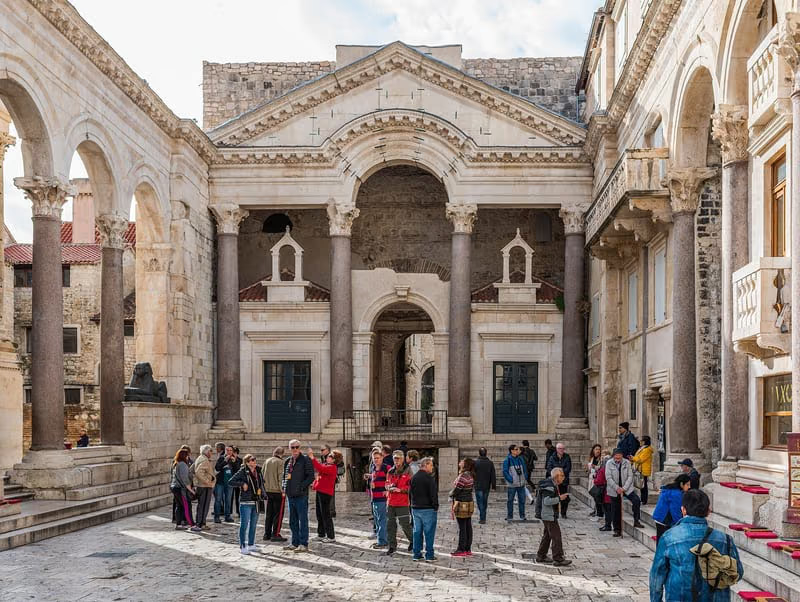
The Roman Forum opens the city’s deepest layer — columns, paving and the sense of a Mediterranean civic stage that predates the cruise age by two millennia. Walk the space slowly; this is atmosphere, not a museum queue.
Tip: Morning light is kinder for photographs; midday can feel harsher and busier.
The round pre-Romanesque Church of St Donatus is one of Zadar’s defining silhouettes. Circle the exterior, feel the scale, and decide whether an interior visit fits your time and interest.
Tip: You do not need every interior to feel you have arrived — the form alone is memorable.
Continue toward the Cathedral of St Anastasia and its surrounding approaches. Notice how Roman, medieval and later layers sit within a few minutes’ walk — Zadar’s gift is compression, not sprawl.
Drift toward the western waterfront promenade where the city meets the Adriatic. The mood shifts from stone lanes to sea air — this is where Zadar becomes quietly theatrical.
Tip: Keep an eye on time once you reach the water; the installations invite lingering.
Sit on the Sea Organ steps and listen. Waves play the instrument — one of Europe’s most original waterfront experiences. Stay long enough to hear the sea change the music.
Tip: Even if you take an excursion another day, do not miss this.
A few steps away, the Greeting to the Sun solar circle answers with light — especially evocative toward dusk. By day it is still a striking geometry against the Adriatic.
Tip: Sunset here is famous; only chase it if your all-aboard truly allows.
Peel back toward harbour cafés for a Dalmatian pause — coffee, gelato or a light bite. Choose places where locals actually sit, not only the front-row tourist terrace.
Retrace toward the shuttle point with composure. Include wait time, the ride to Gaženica and your personal buffer. The ship will not wait for one more photograph.
Tip: Aim to be at the terminal 60–90 minutes before all-aboard.
Don't miss
Viewpoints, quieter streets and details that repay a slower pace.
The city’s most unique creation — music made by the Adriatic. Worth the sit even if you skip every interior.
Solar light installation beside the Organ — unforgettable at dusk when timing allows.
Open civic stone that anchors Zadar’s ancient identity without a fortress spectacle.
The round pre-Romanesque silhouette that defines many first photographs of the city.
Venetian monumentality framing your arrival into the Old Town.
Adriatic horizon, stone steps and evening colour — Zadar’s quiet drama.
Coffee & cake
One or two genuine cafés or bakeries — chosen for quality, not proximity to the tour-bus stop.
Coffee and a short pause
Any well-run café on or just off Narodni trg where the terrace feels local rather than performative — espresso, people-watching, reset.
Near: People's Square
Light bites and Adriatic air
After the Sea Organ, choose a harbour café for gelato or a light Dalmatian bite. Look for menus with grilled fish, olive oil and simple salads rather than only cruise-laminate photographs.
Near: Near the waterfront / harbour
Local tips
Use terminal facilities before the shuttle. In town, cafés and some public facilities near the waterfront are the practical options.
Cards are widely accepted. A little cash still helps for small purchases.
Bring a bottle from the ship. Restock at cafés without a long detour.
Ship Wi-Fi fades. Cafés often help if you need a quick schedule check.
Zadar’s Old Town is generally comfortable by day. Use normal city awareness in crowded shuttle and waterfront moments.
Stone paving and steps limit wheelchair access in places. The waterfront promenade is often easier than the densest lanes.
Morning is calmer for Forum and churches. Late afternoon light on the waterfront is extraordinary when all-aboard allows.
Back to your ship
Independent exploration only works when the buffer is honest. Plan backwards from all-aboard.
Latest departure
Leave the Sea Organ / café area early enough for the walk to the shuttle, wait time, transfer to Gaženica and your personal buffer.
Walking time
Budget time from the waterfront back to the shuttle point, then the shuttle to Gaženica — often 30–50 minutes combined depending on waits and pace.
Taxi alternative
Taxis can help if legs tire or weather turns — agree Gaženica cruise terminal clearly and watch for queues when multiple ships are in.
Safety margin
Aim to be back at the terminal 60–90 minutes before all-aboard, including shuttle time from the Old Town. Independent days fail only when the buffer is optimistic.
Comfortable shoes matter more than any packing tip. If sunset tempts you, confirm the maths twice.
Explore further
If you'd like Croatia’s cascading countryside beyond the historic peninsula, our Editor's Choice excursion — Scenic Krka Waterfalls, Lake Cruise & Skradin — is the natural next step. It is never required; it is simply the day we recommend when a walk alone is not quite enough.
From Gaženica to the historic peninsula — calm logistics for a beautiful day ashore.
Waves that play music on stone steps.
A solar circle answering the Sea Organ with light.
A compact peninsula of Roman stone, Venetian gates and café life.
Yes. This is a self-guided editorial route. You may pay for shuttle fees if charged, café purchases and any optional church or museum entries.
Typically three to five hours with café pauses. Shorten by prioritising Forum, St Donatus and the waterfront installations.
Our editorial promise
We'll always recommend the experience we'd choose ourselves.
Our goal is to help you enjoy the best possible day ashore.